How to Keep Kids Busy This Summer Without Screens (And Actually Enjoy It)
Every summer starts the same way. School lets out on a Friday, everyone is thrilled, and by Monday someone is bored and the TV is on by 9am.
It's not that screens are the enemy. It's that without a plan, they become the default. And once screen time becomes the default, it takes over.
After a few summers of trial and error, we finally figured out a system that works. It's not complicated. It mostly comes down to having a structure for the mornings and a running list of things to do so no one ever has to ask "what should I do now?"
Here's what we use.
The Core Problem: Unstructured Time Fills Itself with Screens
Kids are not great at self-directing their free time, especially at the start of summer. The school year gives them a schedule, then suddenly all of that structure is gone.
The fix is not to fill every minute. It's to give the day just enough shape that kids know what the options are and can make a choice.
We call it "busy time before screen time." Any screens in our house come after the morning is done. That one rule alone changed our summers.
The Morning Block
Our TV-free morning runs from whenever they wake up until 11:30am. During that time, screens are off by default. They know this. They don't fight it much anymore because they know screens are still coming later.
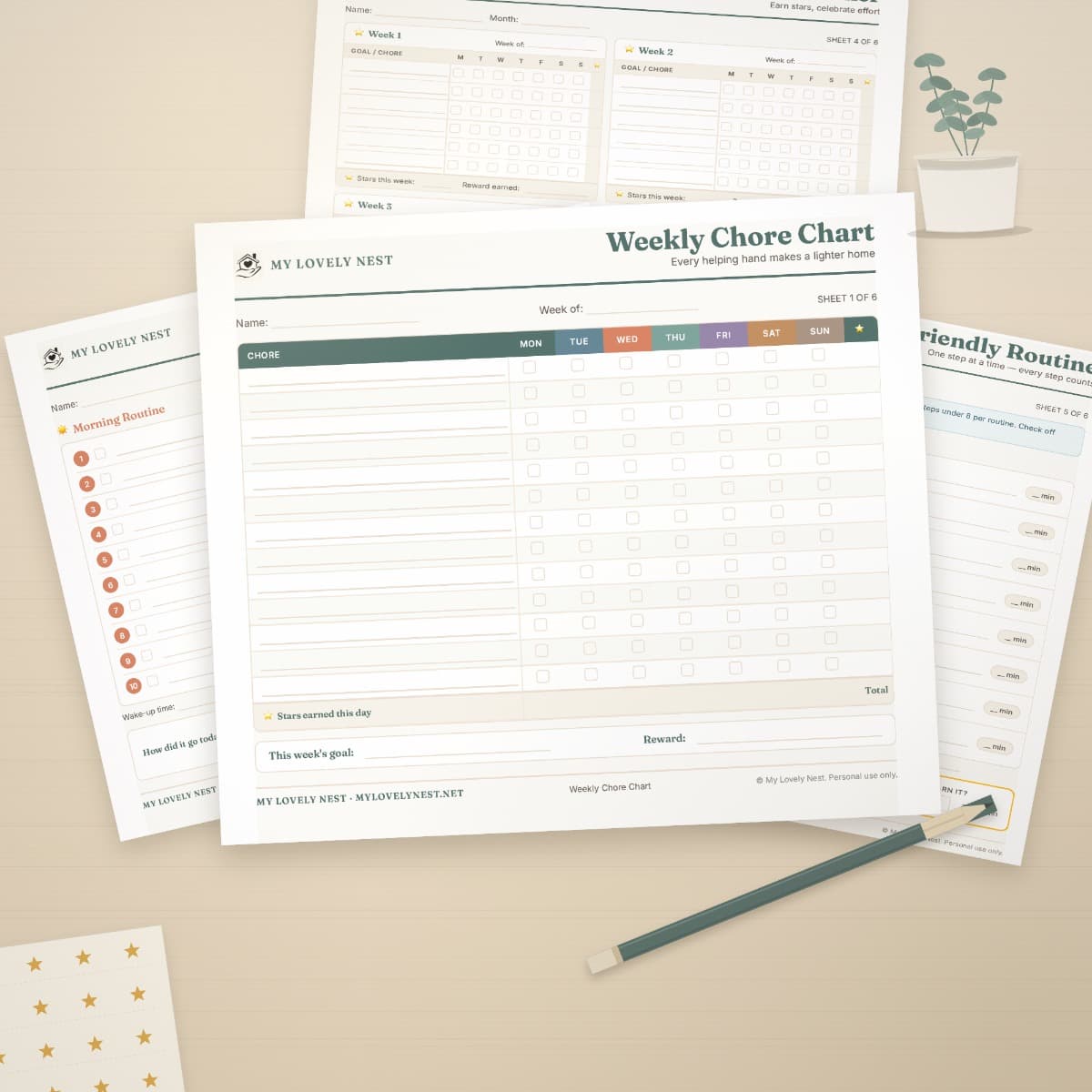
The Summer Activity Planner for Kids has the exact weekly schedule template we use. It has a column for each day with a dedicated morning activity block, a reading slot, and a free play window. I fill it in on Sunday nights. The kids can see the whole week, which reduces the "what are we doing today?" questions significantly.
Within the morning block, we rotate through a few categories:
Creative projects. Art, crafts, building. Something with their hands.
Outside time. Even 30 minutes of outdoor play shifts the energy.
Reading. Independent reading counts. Audiobooks count too. The Summer Activity Planner has a reading log where kids can track every book they finish, which turns reading into something they're proud of rather than something they're doing to get to screens.
Life skills. Cooking a simple lunch, folding laundry, sweeping the porch. Real tasks they can actually do.
The Supplies That Make It Work
Having the right materials available makes a big difference. When a kid decides they want to do something creative and there's nothing to work with, they give up and go find a screen. These are the things we keep stocked.
Air-Dry Clay
Air-dry clay is endlessly reusable before it sets, and once a project is done, kids can paint it. We keep a block of it accessible in the craft bin. It's quiet, it's focused, and it keeps kids busy for a surprisingly long time.
Watercolor Paint Set
Watercolors are less messy than acrylic, dry fast, and they produce results kids are actually proud of. A decent set with a few brushes is all they need. We tape paper to a clipboard so it doesn't slide around.
💡 Tip
STEM Building Kit
Something they build from instructions or from scratch: marble runs, circuit kits, magnetic tiles, wooden blocks. These tend to be multi-day projects, which is great. A kid who is in the middle of a build will go back to it.
Kids Cookbook
A cookbook written for kids gives them a project they can actually finish and eat. We started with simple recipes: muffins, scrambled eggs, pancakes. By the end of last summer, my older one could make a full lunch without help. It also covers the "what's for lunch" conversation, which I appreciate.
Sidewalk Chalk Set
The lowest-tech outdoor solution. Chalk covers a lot of outdoor time: drawing courses, hopscotch, obstacle outlines, town maps. We keep it near the back door so it's the first thing the kids see when they head outside.
Chapter Book Series
Getting a kid into a series is the reading unlock. Once they care about the characters, they pick the book up on their own. We let the kids choose their series at the start of the summer.
Three More Finds Worth Having
These three came up recently and they are the kind of thing I wish I had found at the start of the summer. Each one has a feature that makes it different from the standard version.
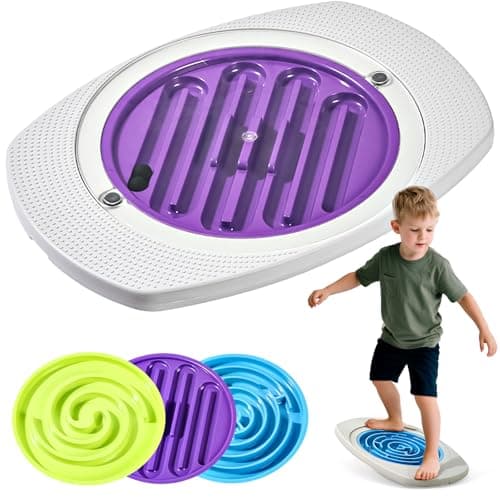
Balance Board with Interchangeable Mazes
A balance board with a maze built into the top. Kids try to guide a ball through the maze while staying balanced. It comes with 3 interchangeable maze inserts at different difficulty levels, so it grows with them. It works balance and focus at the same time and our kids have gone back to it every single day since we got it.
Educational Insights Squeegee Art Kit
Pre-printed art sheets, paint bottles, and a squeegee. You pour the colors across the sheet, drag the squeegee over it, and the image underneath reveals itself. The results genuinely look impressive, cleanup is easier than regular painting, and kids immediately want to do the next one. The ocean scene kept mine busy for a full morning.
Non-Spill 3D Bubble Pencil
Not a regular bubble wand. This one lets kids build 3D bubble structures, stacked shapes that hold together instead of floating off immediately. The non-spill design keeps the solution in the pencil even when tipped, which matters with kids outdoors. Every kid who sees it wants a turn.

The Summer Bucket List
At the beginning of the summer, we sit down together and make a bucket list. The kids each add things they want to do: go to the splash pad, make homemade ice cream, visit a specific park, sleep in a tent in the backyard.
Having the list means no one has to invent activities on the spot. On a day when we have some extra time or a kid who needs a change of scenery, I look at the list.
The Summer Activity Planner has a bucket list template with 30 fill-in spots, which is exactly enough to cover the summer without feeling impossible. It's one of the first things I print at the start of June.
The Family Outing Planner
We try to do one bigger outing per week. A museum, a nature trail, a pool, a day trip somewhere. These are the things kids remember at the end of the summer, and they're also the ones that require the most planning.
I use the family outing planner from the Summer Activity Planner to map out the outing: where we're going, what to pack, estimated cost, and what each kid is excited to see. Writing it down means I'm not scrambling the morning of, and the kids feel like they're part of the plan.
⭐ Good to know
What to Do When Kids Say They're Bored
Even with a system, bored moments happen. Our rule: if you say you're bored, I give you a job. Sweep the kitchen, wipe down the bathroom sink, take out the recycling.
We've had very few bored complaints since implementing this rule.
The boredom buster cards in the Summer Activity Planner are a better option I offer before the chore list. Twenty prompts like "build a fort," "draw a comic strip," "write a letter to a grandparent," "invent a new game." The kids pull a card and off they go.
Shop This Post
Get weekly home + meal planning tips
Practical ideas for a lovelier home. No fluff, just what actually works.
No spam, ever. Unsubscribe anytime.
This post may contain affiliate links. As an Amazon Associate, LTK creator, and Walmart affiliate, I earn from qualifying purchases at no extra cost to you. Product images and prices shown are sourced from Amazon.