Weekly Chore Chart for Kids by Age (Free Printable)
My kids used to look at me like I'd asked them to solve a math problem every time I said "go clean your room." Blank stares. Negotiations. The slow walk to the bedroom that somehow took eleven minutes.
The problem wasn't that they didn't want to help. It was that "clean your room" means nothing to a seven year old. They need to know exactly what to do, in what order, and how they'll know when it's done.
That's what a chore chart actually solves.
Why Most Chore Systems Fall Apart
The most common mistake is starting too big. You make a beautiful chart, assign everything at once, and it works for three days. Then it gets ignored, you get frustrated, and the chart comes down.
The systems that stick share a few things in common.
What makes a chore chart work
- 1Chores match what the child can actually do at their age. Too hard and they give up. Too easy and they stop caring.
- 2Expectations are written down, not verbal. Kids do better when the task is visible, not something they have to remember from what you said Monday morning.
- 3There's a reward tied to effort, not perfection. Stars, screen time, a small treat at the end of the week. Something they're working toward.
Start with three to five chores, not fifteen. Build the habit first. Add more once the routine holds.
Age-Appropriate Chores: A Real Breakdown
This is the part most chore charts skip. The chart is blank and you're left guessing what's actually reasonable for your kid's age. Here's what works at each stage.
Ages 2 to 4 (with a parent helping)
At this age the goal is habit, not results. They won't do it perfectly and that's fine. You're building the idea that everyone in the house helps.
- Put toys in the bin when playtime is over
- Put clothes in the hamper
- Put their plate on the counter after meals
- Help wipe up spills with a cloth
- Put napkins on the dinner table
Keep it to two or three things. Celebrate every time they do it. At this age, the win is that they tried.
Ages 5 to 7 (with some guidance)
This is when the chart becomes really useful. They can read it or follow pictures, and they love checking boxes.
- Make their bed (doesn't need to be perfect)
- Tidy their floor and desk before bed
- Set and clear the dinner table
- Rinse their own dishes
- Load the dishwasher
- Sweep small areas with a broom
- Wipe the bathroom sink
💡 Tip
Ages 8 to 10 (mostly independent)
At this age they can take real ownership of tasks without you supervising. They still need reminders, but not hand-holding.
- Make bed neatly
- Vacuum their bedroom
- Change pillowcases
- Empty the dishwasher and put items away
- Wipe kitchen counters after meals
- Pack their own school lunch
- Take out recycling
This is also a good age to introduce a "weekly job" that rotates. One week they vacuum the living room, the next they wipe down the bathroom. Keeps it from feeling like the same list forever.
Ages 11 to 13: Chore Chart for Teens (Independent)
They can handle real household tasks. This is when chores start to look less like kid jobs and more like actual contributions.
- Change their own bedsheets weekly
- Dust surfaces in their room and common areas
- Cook simple meals with some guidance (pasta, eggs, sandwiches)
- Clean the stovetop after cooking
- Wash pots and pans
- Organize their own closet
- Mow the lawn or help with outdoor tasks
An 11 year old can absolutely make dinner once a week. Start with something simple and build from there. It's one of the most useful things you can teach them before they leave home.
Ages 14 and up (full responsibility)
Teenagers can take on nearly everything. The goal now is preparing them for living independently, not just helping around the house.
- Full bedroom upkeep without reminders
- Wash their own bedding weekly
- Plan and cook a family meal
- Grocery shop from a list
- Do their own laundry start to finish
- Deep clean a room when asked
I know parents who resist giving teens real responsibility because it feels easier to just do it yourself. It is easier in the short term. But a 17 year old who has never done laundry or cooked a meal is going to struggle hard in their first apartment.
Free Printable: Weekly Chore Chart for Kids
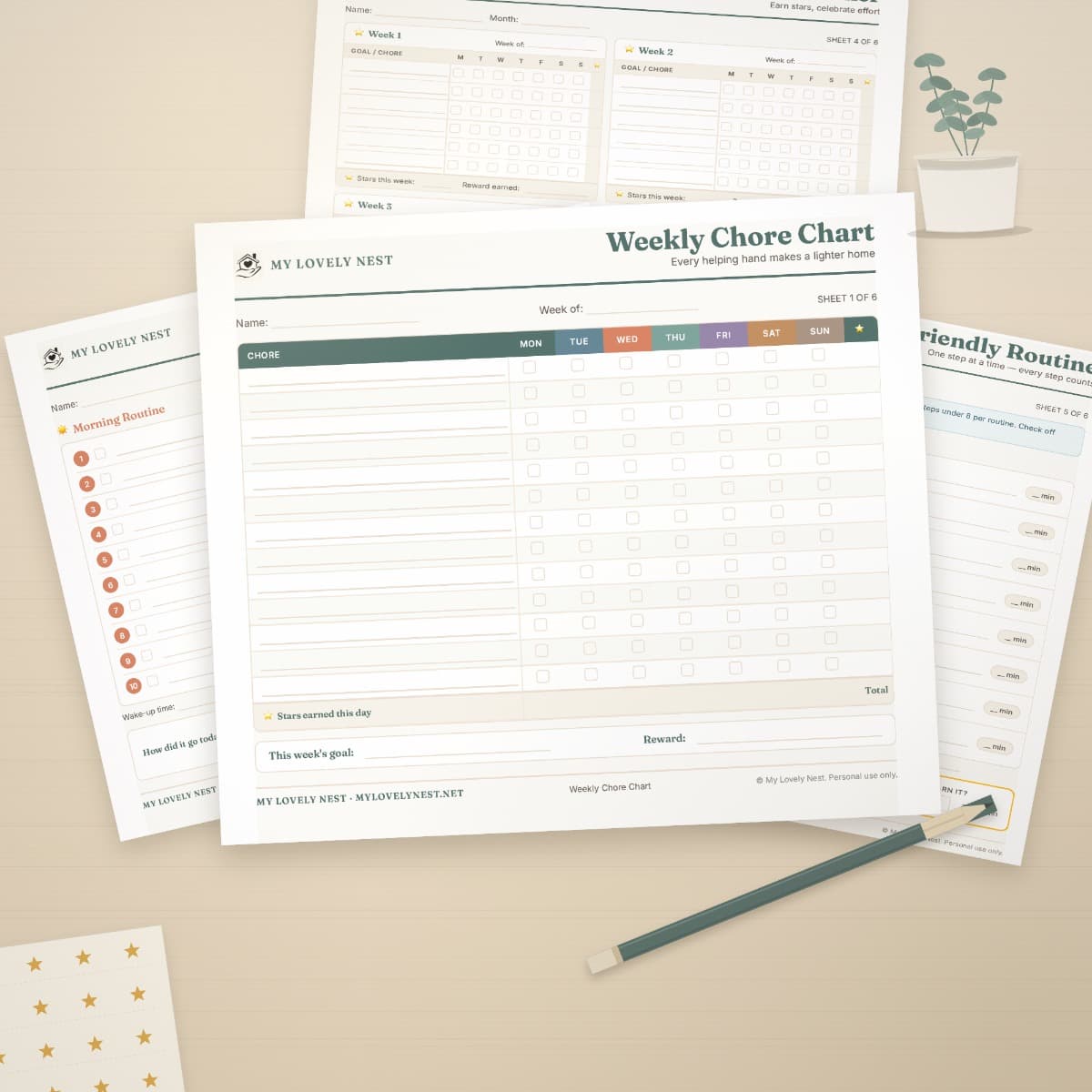
I made a free version you can download and print today. It has 13 write-in chore rows, daily checkboxes for all 7 days, a star count at the bottom of each day, and a weekly goal and reward strip. Works for one child or you can print a copy per kid.
Download the Free Chore Chart →
US Letter and A4 sizes both included.
Chore Chart Ideas to Make It Actually Stick
1. Introduce it on a Sunday, not a Monday. Sunday feels like a reset. Monday feels like a rule being enforced. Same chart, very different reception.
2. Let them fill in their own chores. For kids 6 and up, sit down together and decide what goes on the chart. When they choose it, they own it. When you assign it, they resent it.
3. Review it at the same time each day. Right before dinner works well for most families. It becomes part of the routine rather than a random check-in that feels like surveillance.
4. Tie the reward to stars, not perfection. If they need 25 stars to earn the reward and they got 23, that's still a win worth celebrating. Holding out for a perfect week kills motivation faster than anything else.
The Full Bundle, Also Free
The chart above is a great start. The full bundle takes it further, adding everything else you need to run chores consistently as a family, and it's free too.
It includes a morning and bedtime routine planner, a family chore assignment sheet with daily, weekly, and monthly tasks, a 4-week star reward tracker, an ADHD-friendly routine chart with numbered steps, and the full age-appropriate chores reference guide covering ages 2 through 14+.
Six sheets total, free.
Get weekly home + meal planning tips
Practical ideas for a lovelier home. No fluff, just what actually works.
No spam, ever. Unsubscribe anytime.
This post may contain affiliate links. As an Amazon Associate, LTK creator, and Walmart affiliate, I earn from qualifying purchases at no extra cost to you. Product images and prices shown are sourced from Amazon.