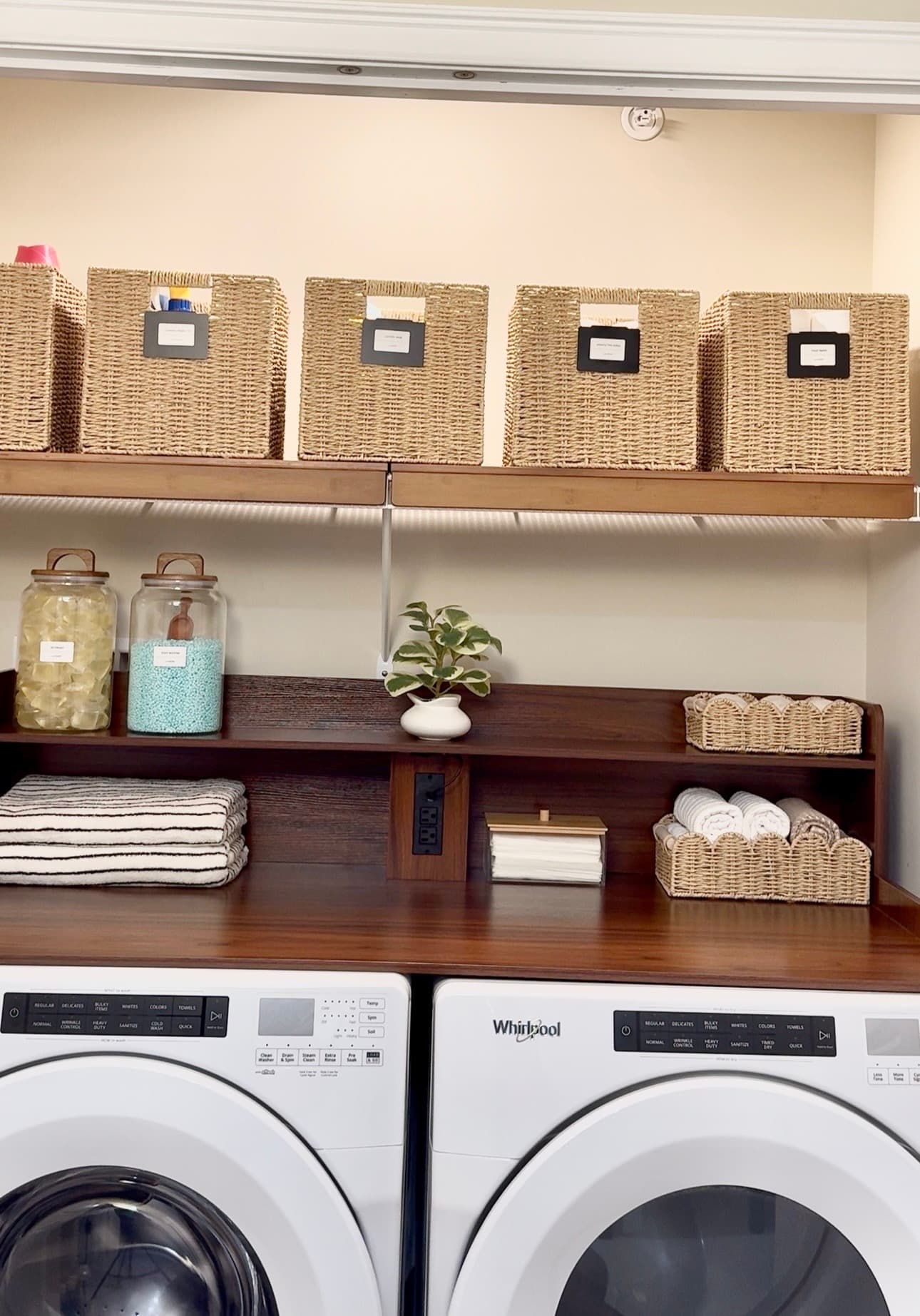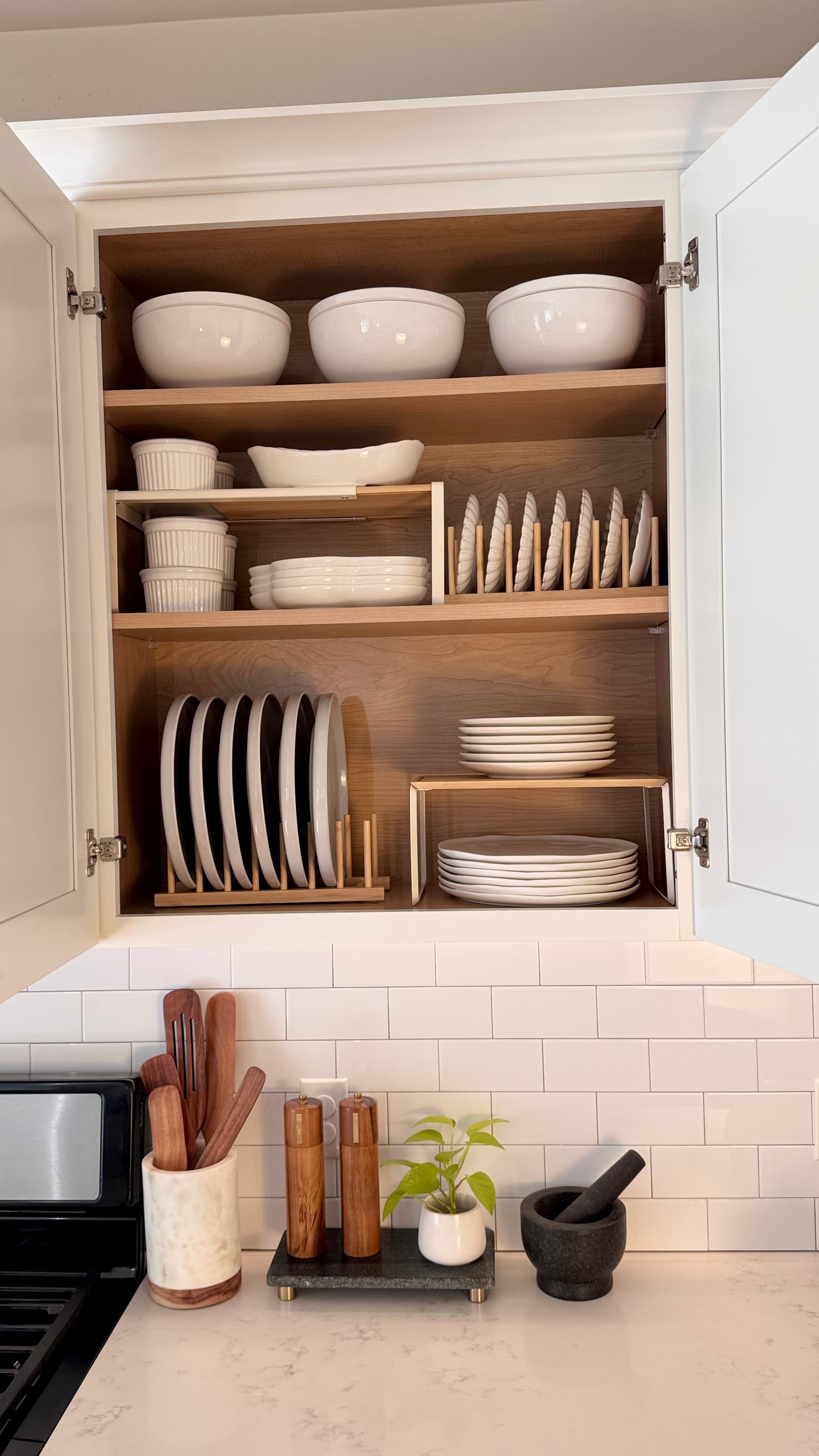
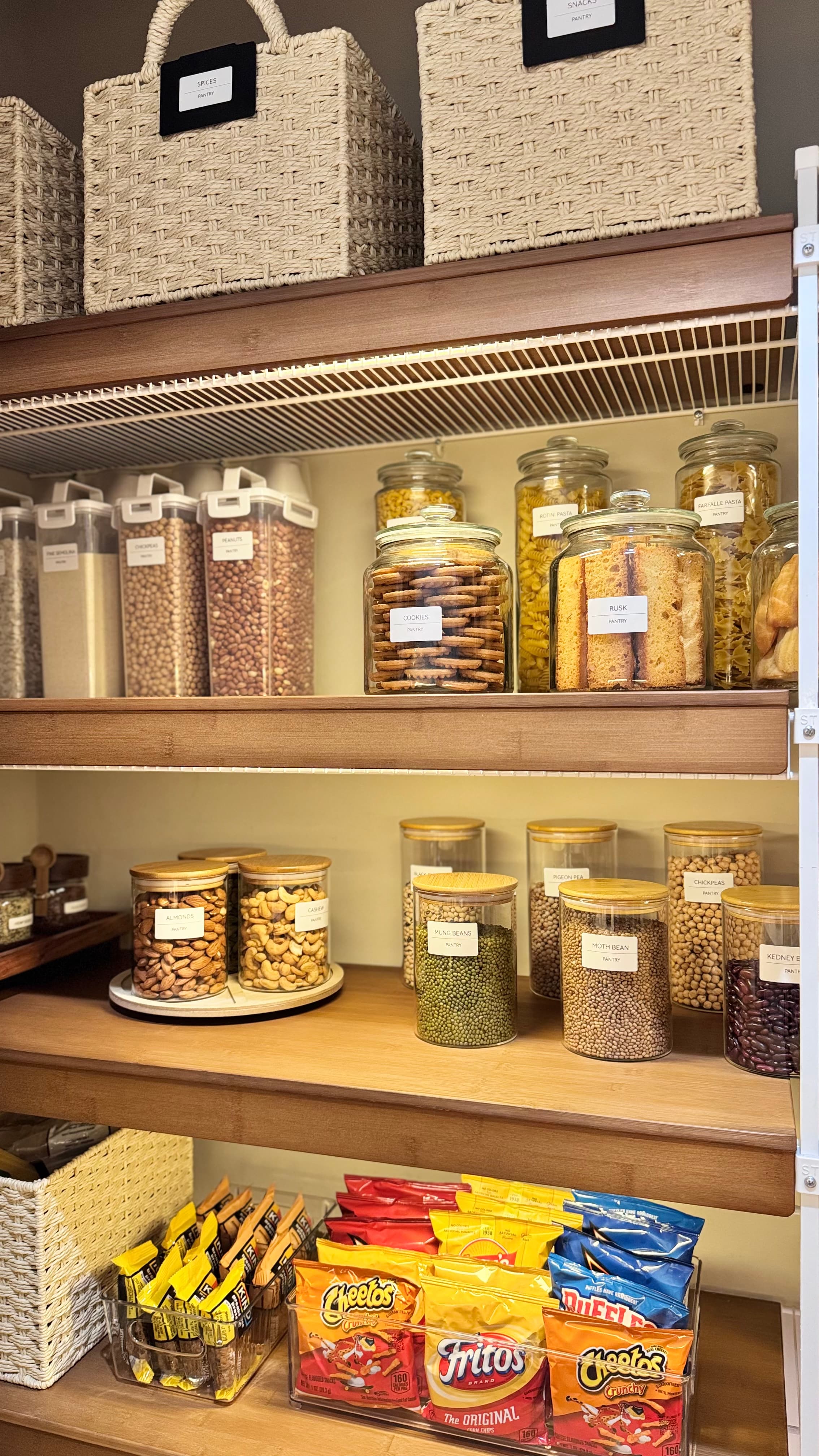
I put off organizing our pantry for two years. Every few weeks I'd do a big purge, feel great about it for a few days, and then slowly watch it collapse back into chaos. Cans stacked behind other cans. Cereal boxes falling over. A bag of flour I'd bought twice because I couldn't see the first one.
This spring I finally committed to building a system instead of just cleaning. One Saturday afternoon, a long Amazon order, and I haven't had to do a full pantry reset since.
Here's exactly what I did.
Why Most Pantry Organizing Fails
The problem isn't that you're bad at organizing. It's that most pantry setups rely on willpower. Everything goes back in the right spot because you remember where it goes. That works for about three days.
A system that sticks works even when you're tired and just want to shove the groceries away and get dinner on the table. Everything needs a home that's obvious enough that anyone in the house can put things back correctly without thinking.
My Two Rules
- 1Like goes with like. Snacks with snacks, baking with baking, beans with beans.
- 2Everything must be visible. If you can't see it, you'll buy a second one.
Step 1: The Total Clear-Out
Before buying anything, pull everything out. Yes, everything.
You'll almost certainly find:
- Duplicates (I had three packets of chickpea flour)
- Expired items (check the dates, some will genuinely surprise you)
- Things that don't belong in a pantry at all
Once the shelves are bare, wipe them down. This is also the moment to group your categories: baking, grains, canned goods, snacks, breakfast, oils and condiments, kids' food. Whatever makes sense for how your family actually shops.
💡 Tip
How to Design Your Pantry Layout Before You Buy Anything
The biggest mistake I made the first few times I tried to organize was buying products before I had a plan. I'd order a bunch of bins, they'd arrive, and I'd realize I had no idea where anything was going.
Before you spend a single dollar, design your pantry zones on paper. Walk to your pantry with your phone and take a photo. Then think about how your family actually uses it.
- What do you reach for every single day? That goes at eye level.
- What do the kids grab themselves? Shelf they can reach.
- What do you buy in bulk and store long-term? Top shelf or floor.
- What are the awkward oversized items that never have a home? Design for those specifically.
Once I mapped it this way, I stopped buying random organizers and started buying with purpose. Every product had a specific job before it arrived. That's what makes the difference between a pantry that looks organized for a week and one that actually stays that way.
Step 2: The One Product That Changed the Look
If you do nothing else from this post, do this one. The single product that took my pantry from "okay it's organized" to "wait, this looks like custom millwork" was a set of bamboo wire rack covers.
If you have standard white wire shelves like I did, you know the problem. Things tip over. Small items fall through. The whole thing reads cheap no matter how nicely you organize the contents. These covers slip right onto the existing wire shelves and instantly give you a flat wood surface that matches a custom pantry build.
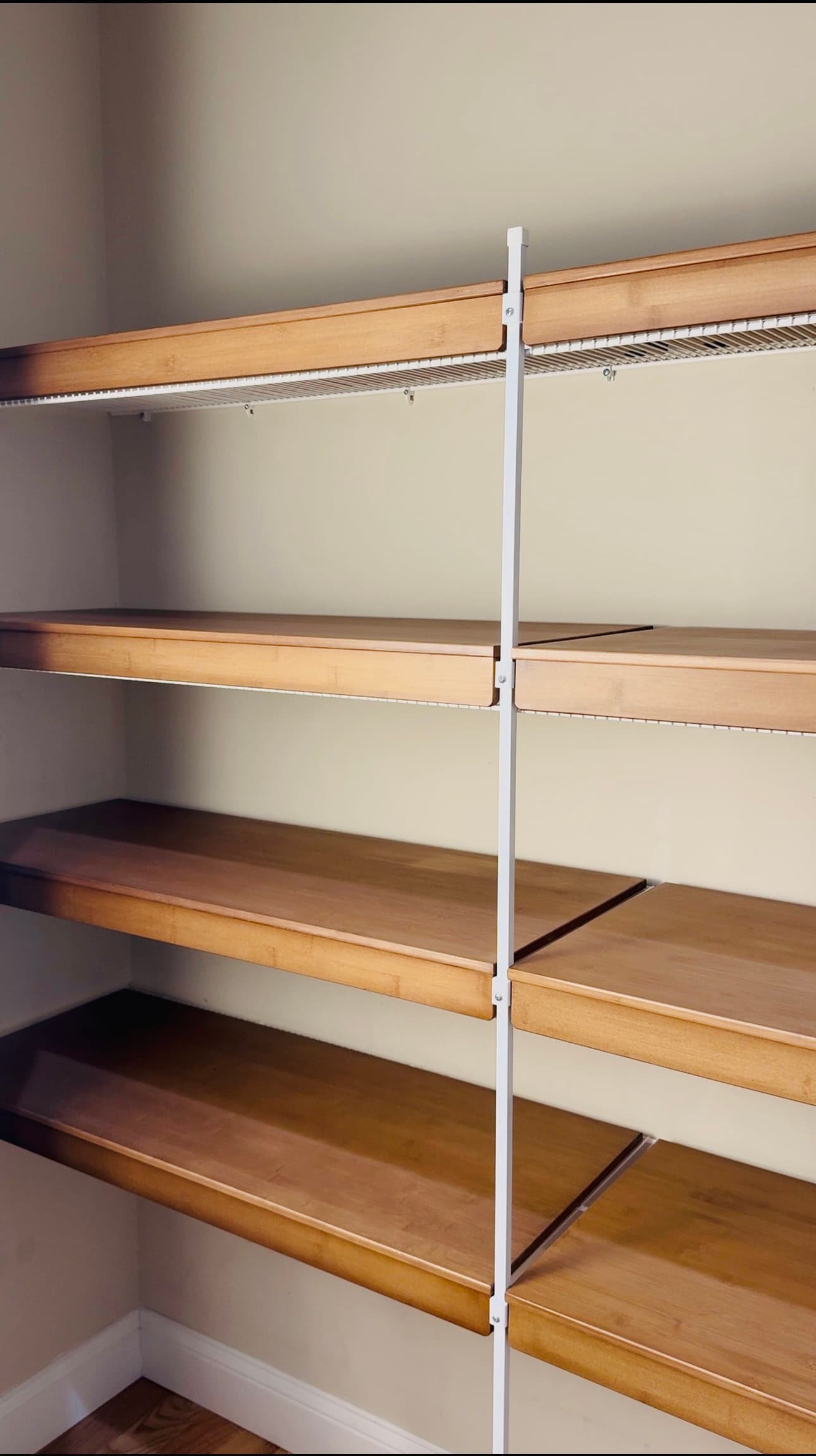
Get the Bamboo Wire Rack Covers on Amazon →
Budget alternative: Wire Rack Covers (Imitation Wood) 6-pack from Wayfair →
Best Pantry Organization Containers and Storage
Six things that did the heaviest lifting in the whole system.
1. Glass Food Storage Jars Set (Matching Sizes)
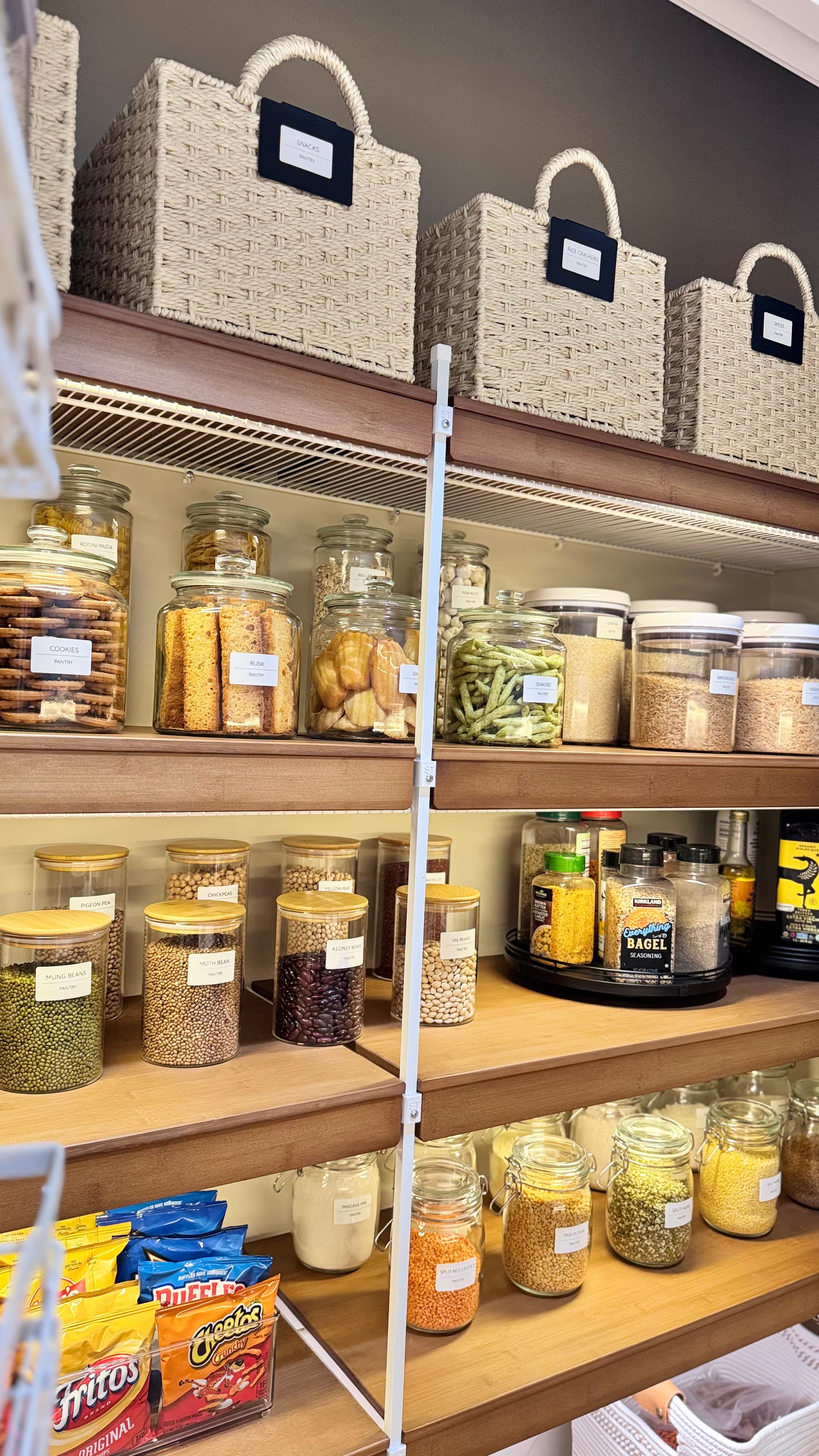
This was the second-biggest visual upgrade. Decanting cereal, oats, granola, pasta, beans into matching clear jars makes everything look intentional rather than chaotic. The trick is the matching set, not random jars you collect over time.
2. Over the Door Pantry Organizer (8 Tier Hanging)
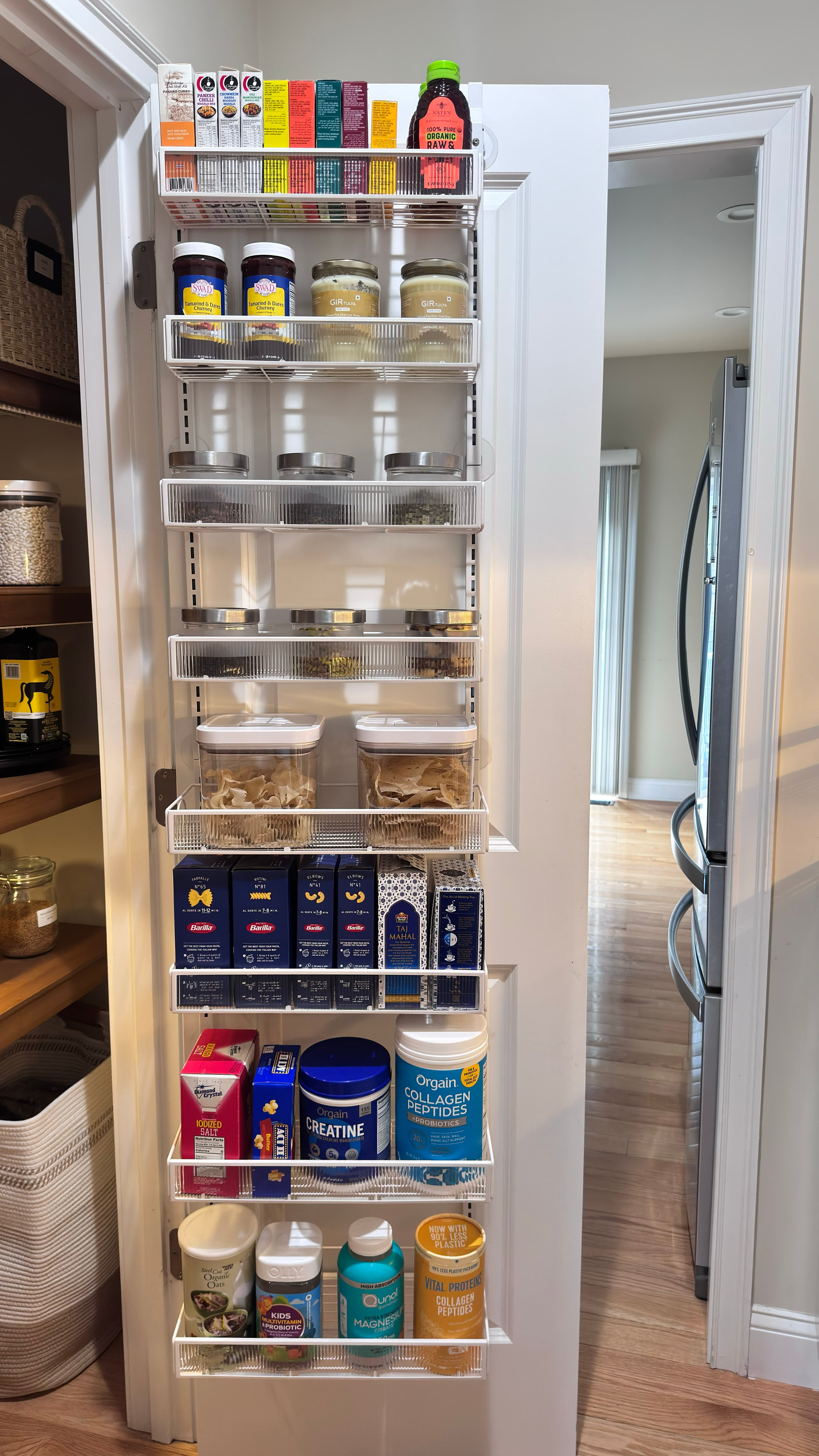
The back of the pantry door is dead storage space by default. This 8-tier rack turned it into prime real estate for boxed pasta, spices, supplements, and small packets. Probably the highest "storage gained per dollar spent" item in the whole list.
3. NIIMBOT B21 Label Maker
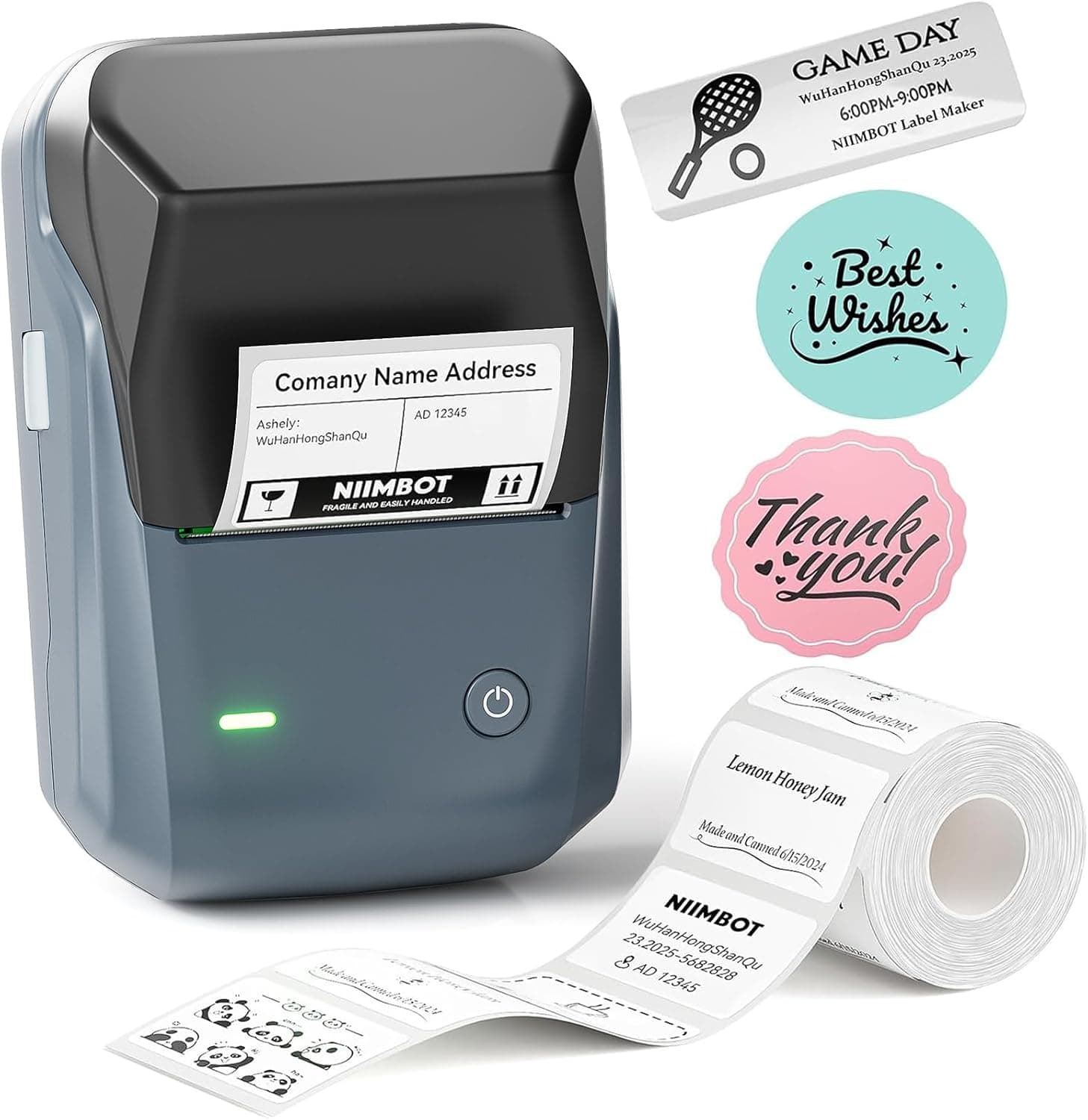
This one is such a game changer because you actually design your own labels for the items you have. Most pre-made label sets come with half the labels you'll never use (sorghum flour?) and missing the ones you actually need. With NIIMBOT you print exactly "Goldfish," "kids' protein bars," "almond flour" and whatever else is real in your pantry. Crisp clean labels turn a "looks organized" pantry into "everyone can put groceries away correctly without asking." My kids now know exactly where everything goes.
4. Oak Wood Lazy Susan Turntable
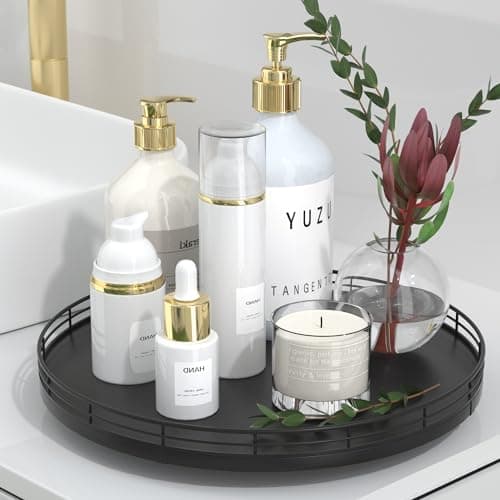
For oils, vinegars, spices, seasonings, and the awkward tall bottles that always end up in the back corner. Spin to find what you need instead of moving six things to get to the one thing in the back. The wood finish ties back to the bamboo shelf covers.
5. Large Bread Box
A bread box is one of those small kitchen upgrades that actually pulls its weight. It keeps bread and baked goods fresh longer by holding them at room temperature, protecting them from dust, insects, and excess moisture, and slowing down how fast they dry out. It also clears the counter so your kitchen looks tidier instead of buried under loaves and pastry bags.
6. Wood Pantry Storage Bins (Stackable Set of 3)
These stackable wooden bins are made for the produce that never has a real "home" in the kitchen: potatoes, onions, garlic, shallots, apples. The open front lets air circulate (which is exactly what these items need to last longer), and the stacking design means you get triple the storage in the same footprint. Pull a bin out, grab what you need, slide it back. Looks intentional on a pantry floor or open shelf instead of plastic bags piling up in a corner.
Also Using (Quick List)
These are the supporting players that made the whole thing work:
- 32 oz Wide Mouth Glass Jars for smaller grains and spices
- Rice and Cereal Storage Containers (2-pack, 5 lb) for rice and bulk cereal
- Water Hyacinth Storage Baskets (Set of 8) for the extra items I don't reach for regularly and the remaining stock that lives on the top shelves
- Large Woven Laundry Hamper (85L) for overflow. Once every container was full, the leftover bulk packages went here.
- Pop-Up Lid Storage Bins for dry goods you reach for often. The pop-up lid flips open with one hand so you can grab and go without unscrewing or unsealing a jar
- Pantry Storage Bins (with Handles) for high shelves where you need a handle to pull the whole bin down
- ClearSpace Pantry Storage Bins with Removable Dividers and Lids for grouping snack packets and small items so they stop migrating around the shelf
- Half Gallon Large Glass Jars with Lids for the bulk items that don't fit in a regular jar (flour, oats, pasta, or anything else you buy in larger quantities)
- Glass Sugar Container with Built-in Spoon for sugar or coffee, with a spoon attached to the lid so the scoop never disappears into the jar
- 1.5 Qt Round Glass Containers with Bamboo Lids for noodles, cereal, and anything else with a wider footprint
- 50 oz Glass Storage Jars with Bamboo Lids (Set of 6) for the everyday matching jar set that anchors the whole look
Step 4: The Setup Order
Once your products arrive, set up in this order. Doing them out of order causes redo work.
- Install the bamboo wire rack covers first. Everything sits on them, so they need to be down before anything else.
- Install the over-door organizer next. It can affect how close your top shelf can be to the door.
- Decant into matching glass jars (grains, beans, pasta, baking staples). This takes longer than you expect. Put on a podcast.
- Label everything with the NIIMBOT before anything goes on a shelf. Bins, jars, and shelf edges if you want. Labeling first means you place each container in its final spot the first time, instead of shuffling things around later.
- Place the wood storage bins on the most-accessible shelf, one per category.
- Set up the lazy susan for oil bottles and seasonings.
- Overflow goes into the woven hamper or extra baskets. Everything has a home, even the awkward bulk packages.
Realistically, plan for 6 to 8 hours total once you factor in the pre-planning and ordering. Do it once and it maintains itself.
What I Put Where
This is specific to our family but gives you a starting point:
- Top shelves: less-used baking supplies, backup stock, big labeled wood bins for snacks and rice crackers
- Eye level shelves: matching glass jars for grains, beans, and pasta
- Middle shelves: lazy susan for oils, vinegars, and spice bottles
- Bottom shelves: rice/cereal bulk containers, bread box, heavy items
- Door: spice packets, supplements, boxed pasta, small everyday items
- Canned goods: grouped together on one dedicated shelf, labels facing forward. A simple can riser (stair-step shelf) makes a huge difference — you can see every can without moving anything. Pantry organization for cans is one of the easiest wins because cans are uniform sizes, so bins and risers fit them perfectly.
The Maintenance Rule
Every time you unpack groceries, spend a few minutes doing a quick reset. Pull things forward, check that bins are in the right spot, toss any empty packaging.
Those few minutes prevent the two-year spiral I used to fall into.
Shop the Full Pantry
Browse the complete Pantry Organization Idea List on Amazon →
Every product I used and a few I considered, all in one place.
Once your pantry is organized, meal planning gets so much easier. I use the Weekly Meal Planner Bundle to plan the week around what's already in stock, which cuts our grocery bill because I'm not buying duplicates or forgetting what we have.
Get weekly home + meal planning tips
Practical ideas for a lovelier home. No fluff, just what actually works.
No spam, ever. Unsubscribe anytime.
This post may contain affiliate links. As an Amazon Associate, LTK creator, and Walmart affiliate, I earn from qualifying purchases at no extra cost to you. Product images and prices shown are sourced from Amazon.