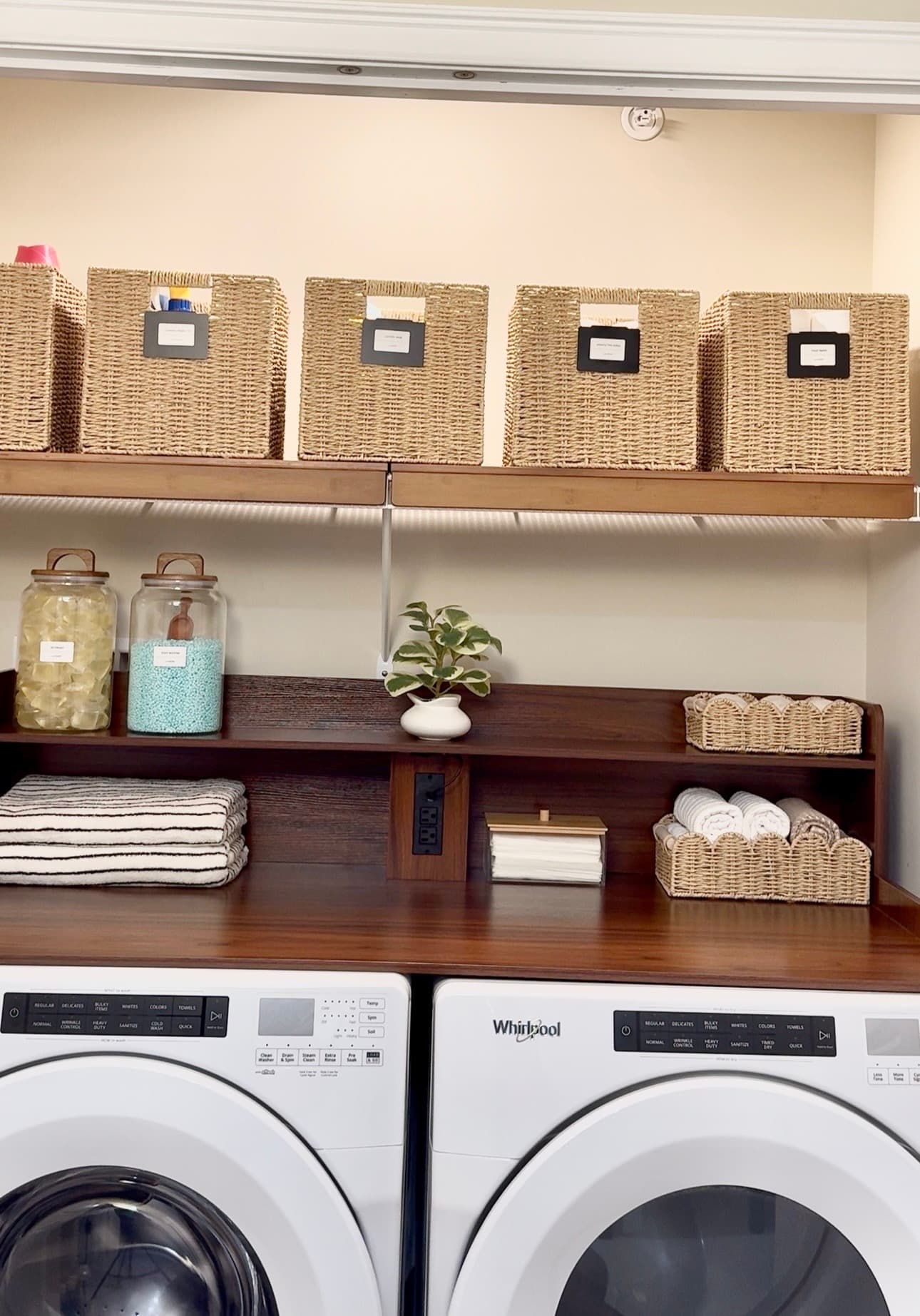
My home used to feel chaotic no matter how many times I cleaned it. I would do a big tidy on a Saturday and by Tuesday it looked like nothing had happened. The problem was not that I was bad at cleaning. It was that nothing had a real home. Everything just landed wherever there was space.
Once I started building systems instead of just cleaning, everything changed. This guide covers the three spaces that make the biggest difference: your pantry, your kitchen, and your living areas. Do all three and your house starts to feel like a different place to live.
The Method Behind Everything
Before I get into specific rooms, here is the idea that runs through all of it.
The Three-Step Method
- 1Clear it first. Get rid of what does not belong before you organize what does. You cannot organize clutter, you can only move it around.
- 2Contain it. Give everything a specific home, not a general area. Specific enough that anyone in your house can put it back without asking.
- 3Keep it. Build one small daily habit that resets the space. Five minutes every evening beats a full Saturday reorganize every month.
Every section in this guide follows this same sequence.
Part 1: The Pantry (and how it saves you money on groceries)
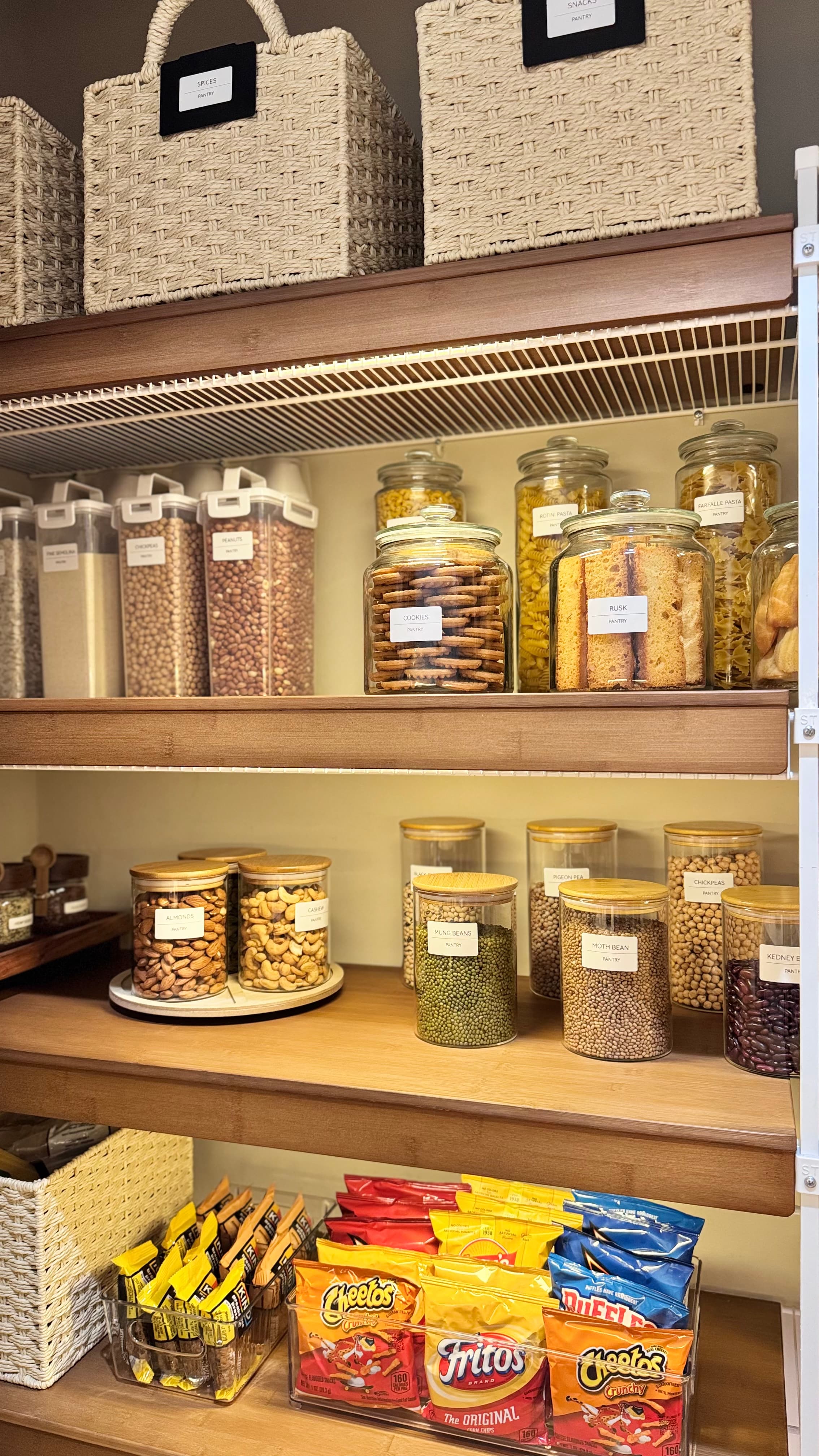
The pantry is where I start with every home organization project because it has the most immediate practical payoff. The average family throws away around $1,500 in food every year, mostly because things get forgotten at the back of a shelf, bought as duplicates, or expired before anyone noticed they were there. An organized pantry fixes all three of those problems.
The pantry clear-out
Pull everything out before you buy a single bin. All of it. Group it by category on your kitchen table: baking, grains, canned goods, snacks, breakfast, oils and condiments. You will find duplicates you did not know you had and expired items that have been quietly sitting there.
While everything is out, wipe down every shelf. This is the only time your pantry will be completely empty and it takes two minutes.
Assign zones before you organize
The zone system is what makes a pantry stay organized instead of slowly drifting back into chaos.
- Eye level: the things you reach for every day. Snacks, breakfast items, everyday spices.
- Below eye level: heavier items. Canned goods, rice, pasta, flour, sugar.
- Top shelf: items you use rarely. Holiday baking, bulk backup, paper goods.
- Door: small items. Spice packets, supplements, boxed pasta, pouches.
The rule is simple: the more often you use it, the more accessible it needs to be.
The products that made the biggest difference
The single product that changed how my pantry looked was bamboo wire rack covers. If you have standard white wire shelves, you know the problem. Things tip over, small items fall through, the whole thing looks cheap no matter how nicely you organize it. These slip right onto the existing wire shelves and instantly give you a flat surface that looks like custom millwork.
After that:
- Lazy Susan turntable for oils, vinegars, and the awkward tall bottles that always end up in the back corner. One spin and you can see every bottle. Under $23.
- NIIMBOT label maker for labeling every container and shelf zone. When anyone in the house can put groceries away without asking where things go, the pantry actually stays organized.
- Stackable storage bins for produce like potatoes, onions, and garlic. Open front lets air circulate so things last longer. Stack them and you triple the storage in the same footprint.
- Large bread box to keep bread fresh longer and clear counter space at the same time.
💡 Tip
The grocery savings system
This is the part most organization guides skip: what to do once the pantry is organized that actually cuts your grocery bill.
Shop your pantry before you make your list. Spend five minutes looking at what you have before you write anything down. This one habit prevents the most common source of food waste: buying a second can of chickpeas when you already have three.
Keep a low-stock notepad inside the pantry door. When something gets to its last one, write it down immediately. You shop from the list, not from memory. Memory is how you come home with four bottles of ketchup.
Plan at least two meals around what you already have. Before you plan anything that requires a grocery run, look at what is expiring soon or what you have too much of. Build meals around those items first.
Families who run this system consistently report spending 15 to 25 percent less on groceries without changing what they eat. Most of the savings come in the first month when you realize how much you already have that you were not using.
Part 2: Kitchen Shelves and Cabinets
Most kitchens have more usable storage than people realize. The problem is usually that things are not organized around how the kitchen is actually used. Everything gets shoved into the nearest available cabinet and then nobody can find anything.
Organize by work zone, not by category
The most useful thing I did in my kitchen was stop organizing by what things are and start organizing by where I use them.
The cooking zone is around your stove. Pots, pans, cooking oils, the spices you reach for every day, and your most-used utensils should live within arm's reach of the stove. Nothing else.
The prep zone is wherever you chop and assemble food. Knives, cutting boards, mixing bowls, measuring cups, and peelers belong in the drawers and cabinets closest to that spot.
The cleaning zone is around your sink. Dish soap, sponges, the spray bottles you actually use for cleaning.
The breakfast zone is wherever your coffee maker lives. Coffee, mugs, filters, protein bars, and the cereals your kids eat in the morning all belong in this zone together.
Once you assign zones, you stop walking across the kitchen six times to make one meal.
The cabinet audit
Before you buy anything for your kitchen cabinets, open every single one and ask this question about each item: do I use this at least once a month?
If the answer is no, it moves to a higher shelf, goes into storage, or leaves the kitchen. The stand mixer you use on Sundays, the waffle maker that comes out three times a year, the fondue set from your wedding: upper shelves, pantry storage, or donate. Accessible cabinet space is too valuable to store things you rarely use.
The products that work
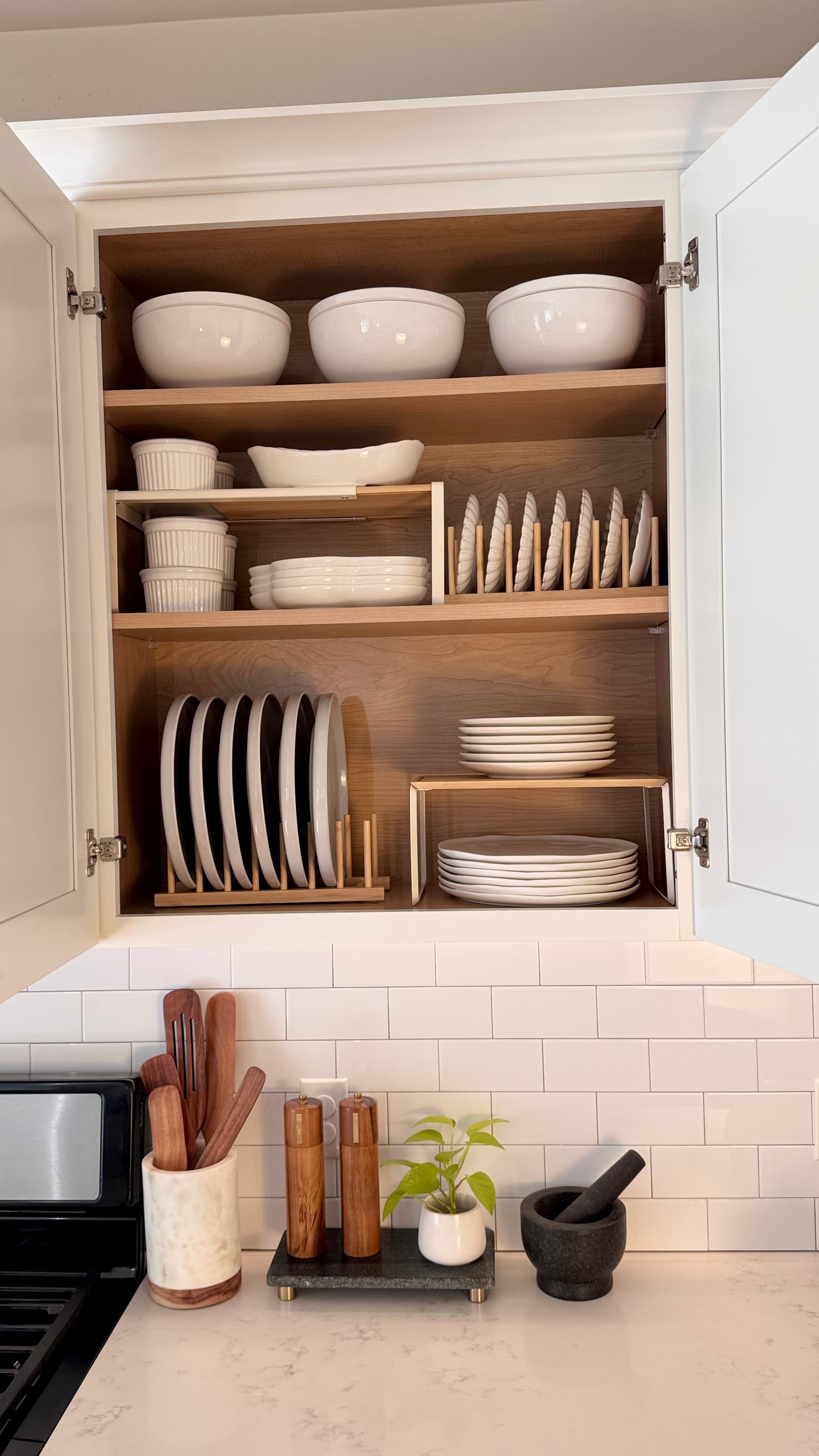
SONGMICS cabinet organizer shelves create a second tier inside any cabinet and are the highest-impact, lowest-cost change you can make. Set of 4 for just over $24. Stack your plates, bowls, or canned goods and suddenly you can see everything instead of digging through piles.
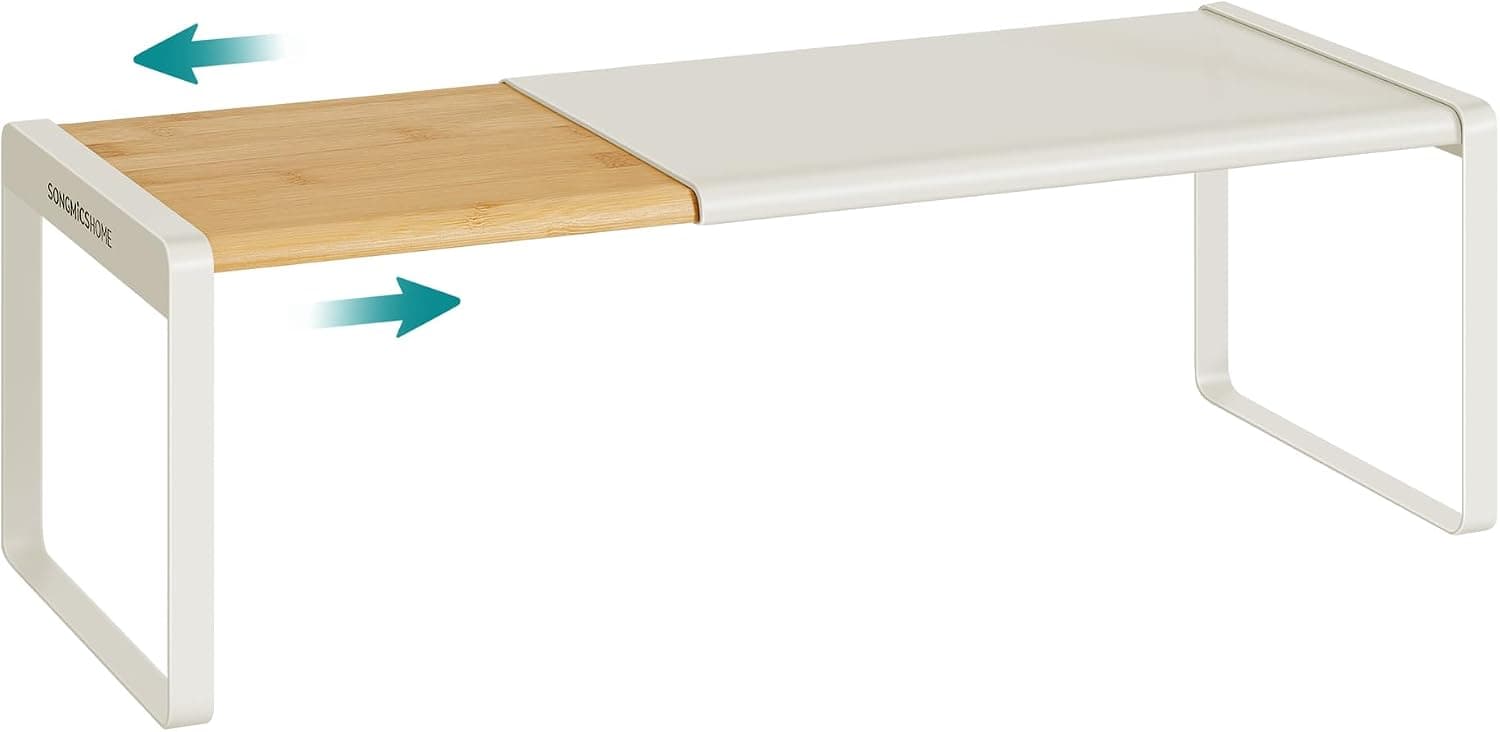
Expandable cupboard shelf organizer for spices and smaller jars. Adjustable width so it fits any cabinet. $19.99. This is the one that makes canned goods and spice bottles a row you can actually see instead of a stack you have to pull apart.
Cabinet shelf organizer set of 2 for the cabinets where you store mixing bowls, containers, or anything that stacks badly. Creates a divider so things stop tumbling. Under $24.
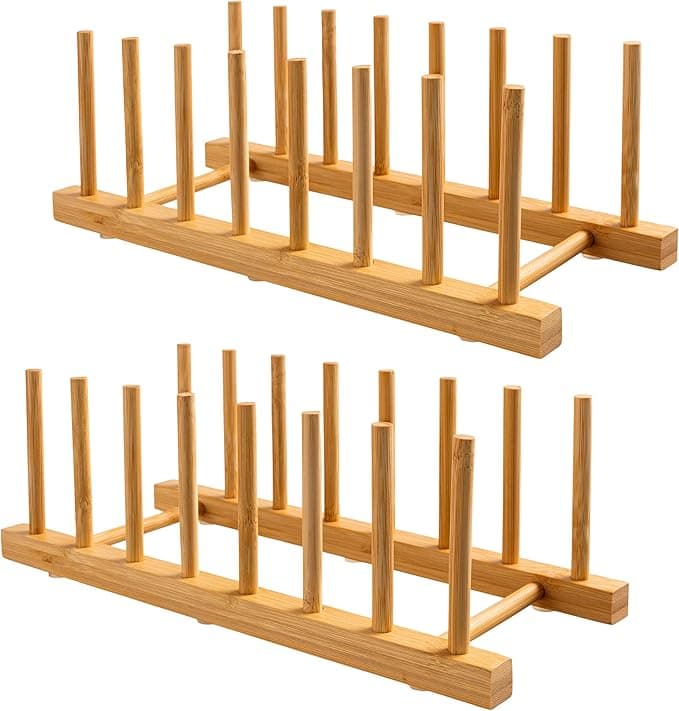
Bamboo dish rack holder for plates stored vertically. Storing plates upright instead of stacked makes it easier to grab one without lifting seven. Two-pack for $9.59.
Stackable metal cabinet organizer for lids, cutting boards, baking sheets, or anything flat that gets shuffled around. Standing things vertically instead of stacking them flat means grabbing the one you want in two seconds. Under $17.
💡 Tip
Part 3: Kitchen Counters
The kitchen counter is the hardest surface to keep clear because it is the most convenient place to put things down. Mail, chargers, yesterday's grocery list, a candle from two seasons ago. It collects everything because nothing has anywhere else to go.
The rule I use: if I do not use it every day, it does not earn counter space.
That sounds simple. It is harder than it sounds because everything feels like it might need to be accessible. But you cannot have the blender, the air fryer, the stand mixer, the food processor, the toaster oven, and the bread maker all out and have your counter look like anything other than a warehouse.
What earns counter space
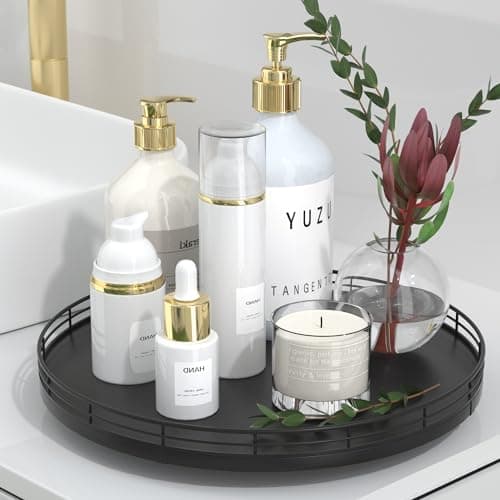
The coffee station. Machine, a small tray to hold everything together. The tray is the key: it makes three separate objects read as one intentional thing instead of a cluster. Any small bamboo or ceramic tray does this.
The toaster. Daily use, earns its spot.
Paper towels. Daily.
The knife block. Daily.
One fruit bowl. Not overflowing. A bowl with a defined size so when it is full, the counter fruit situation is full.
That is roughly five things. The counter has breathing room and it looks like you made choices.
What goes in a cabinet
The blender (a few times a week but takes up a lot of space). The air fryer if you use it less than daily. The stand mixer. The food processor. The waffle maker.
The test for moving something back: if you forget it is in the cabinet and find yourself looking for it on the counter, it earns its place back. If you forget you own it, it eventually leaves.
The products that make it look styled
Checkered cutting board leaned against the backsplash. Takes up no usable surface space, adds warmth and texture. This one detail makes a cleared counter feel styled instead of just empty. $26.99.
Olive oil dispenser bottle instead of the original plastic bottle. Same oil, significantly better looking. Small switch, noticeable difference. $19.99.
Ceramic salt and pepper bowls to replace plastic shakers. These sit on the counter next to the stove and look intentional rather than incidental. Under $20.
Walnut scalloped wood riser for the coffee station. Elevate the machine slightly and the whole station reads as a deliberate display rather than appliances sitting on a counter. $30.99.
Under cabinet lighting that clips under upper cabinets and brightens the counter workspace. This one change makes a kitchen feel more expensive than almost anything else you can add. 8-piece set for $14.99.
⭐ Good to know
The Maintenance System (This Is the Part That Makes It Stick)
Most organization guides stop after the initial setup. That is why most organized spaces stop being organized within a few weeks. Nobody told you how to maintain it.
Here is what I actually do.
Five minutes every evening. Kitchen counter clear. Pantry door tidy. Items that drifted back in the living area back in their spots. Not a full clean. Not a reorganize. A reset. The goal is to wake up to a space that feels calm. When the morning starts that way, the whole day feels different.
Ten minutes once a week. A zone check. Is the pantry still organized or did things get shoved in randomly this week? Is the coffee station drifting? A weekly check prevents the slow drift that turns an organized space back into a chaotic one. You catch it early and fix it in two minutes instead of waiting until it needs a full day.
Monthly. Before you write your grocery list, spend ten minutes on a pantry audit. Check for items expiring soon and put them at the front. Check your low-stock notepad and add those items to the shopping list. This is the maintenance step that keeps the grocery savings going month after month.
The reset is the system. Not the one Saturday of organizing.
Shop the Full Lists
Browse everything I use and recommend, organized by room:
- Pantry Organization Finds — all the pantry products in one place
- Kitchen Shelf Organization — cabinet organizers, dish racks, and shelf solutions
- Kitchen Counter Styling — counter accessories that make a cleared space look styled
All links are Amazon affiliate links. I earn a small commission at no extra cost to you. I only link products I have actually used or genuinely recommend.
Need a cleaning schedule to keep everything on track once you have organized it? Download the free 3-bedroom cleaning schedule here.
Get weekly home + meal planning tips
Practical ideas for a lovelier home. No fluff, just what actually works.
No spam, ever. Unsubscribe anytime.
This post may contain affiliate links. As an Amazon Associate, LTK creator, and Walmart affiliate, I earn from qualifying purchases at no extra cost to you. Product images and prices shown are sourced from Amazon.